


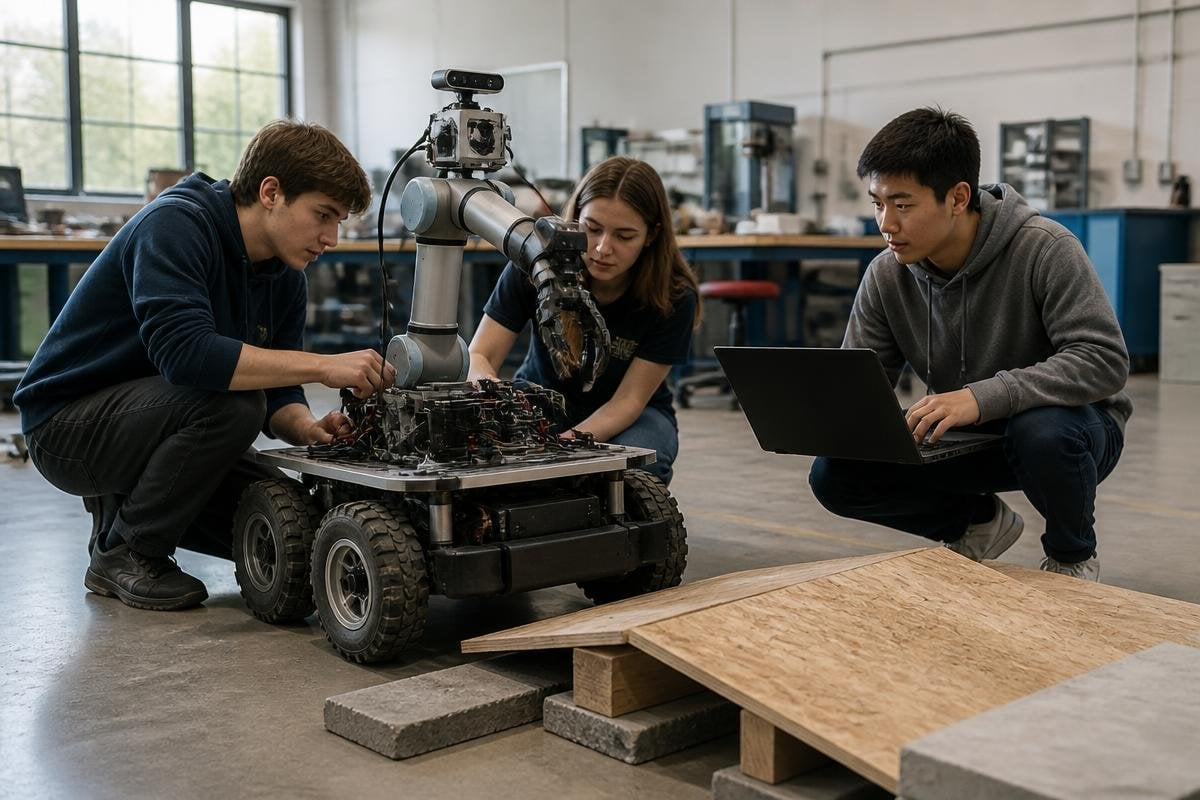
A robotics degree can teach a student to build a working arm, write control code, and test a sensor system. The harder job is preparing them to connect those skills when the robot meets people, uneven floors, changing tasks, and a limited budget.
- Students need full-system work, from sensors and software to motors and safety.
- Failure should be part of the course, with time to measure causes and repair faults.
- A strong program links lab work to the needs of factories, hospitals, farms, and public spaces.
Start with a complete robot
Robotics students often meet the field through separate subjects. One class covers mechanics. Another covers programming. A third covers control systems, which tell motors how to move. That structure helps students learn each part, yet a working robot forces those parts to cooperate.
A useful course should give students one system to carry through the term. They might need to mount a camera, read its data, plan a path, send commands to a motor, and stop the machine when a person enters the work area.
Each step exposes a different fault. A loose bracket can look like a software error. A poor camera angle can make good code fail.
The grade should include the test record. Students can state the task, list the hardware, record the failed runs, and explain the change that fixed the fault. That practice builds a habit they will need when a customer asks why a robot stopped at 2 p.m.
Make failure part of the timetable
Robots rarely fail in one clean way. A wheel can slip. A cable can loosen. A sensor can return bad data for a short period. Students need enough lab time to find those faults instead of rushing from one polished demo to the next.
That means courses should set clear test conditions. The floor type, payload, battery state, lighting, and network link all affect results. A robot that carries 2 kg on a smooth lab floor may behave differently on a rough floor or after several hours of work. Students should record those limits rather than hide them behind a successful run.
Safety belongs in the same work. An emergency stop, speed limit, protective cover, and clear test zone teach students that a robot’s job includes stopping safely. The lesson applies to mobile robots, robot arms, drones, and medical systems.
Connect study to working sites
A university can bring outside tasks into a course without turning the class into product training. A warehouse may need a robot to move bins between marked areas. A hospital may need a cart to follow a route without blocking doors. A farm may need a system to inspect plants while handling dust, shade, and uneven ground.
Each task gives students a different measure of success. A warehouse team may care about cycle time and missed stops. A hospital team may care about noise, cleaning, and safe movement near people. A farm team may care about battery use and the quality of captured images.
Those measures also teach a work habit: name the claim and test it against a result. Robot24.com robotics coverage gives students examples from companies and research teams, so they can compare technical claims with public evidence before moving to the parts around the machine.
Teach the parts around the machine
A roboticist needs more than code and hardware. They also need to explain a test, read a safety rule, estimate a repair cost, and ask whether automation fits the task at all.
Team projects can make those duties visible. One student may handle motion planning while another checks electrical limits. A third may track test data, and another may write the operating instructions. The roles should change so each student learns how decisions in one area affect the rest of the system.
I’d judge a robotics program by its working machines and test records, not by its lab brochure.
A practical choice guide
Before choosing a robotics course or degree, check whether it includes:
- Full-system projects: Students connect sensing, software, motion, and safety in one machine.
- Open lab time: The schedule leaves room for failed runs, repairs, and repeat tests.
- Measured results: Projects use recorded speed, payload, battery time, error rates, or task completion.
- Safety work: Students set limits, use stop controls, and write a clear test plan.
- Outside tasks: Coursework reflects a real operating setting, with limits on space, cost, noise, or staff time.
- Clear reports: Students explain what failed, what changed, and what remains unproven.
A program built this way gives new roboticists a useful starting point: they can handle the machine, question the result, and explain the limits before anyone puts it to work. The next test should begin with a task, a measured result, and a safe way to stop.
