


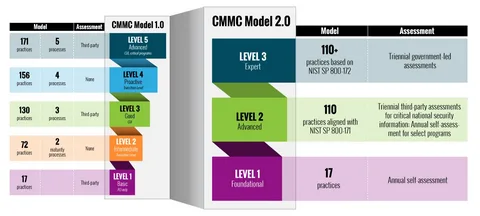
Unexpected gaps often appear in CMMC projects, and many of them tie back to missing clarity about how Controlled Unclassified Information actually moves through an environment. Teams may think they understand their scope until they draw the full picture of CUI movement and realize the boundaries were never accurate. A well-developed CUI flow map gives structure to the entire scoping process and becomes the foundation for meeting CMMC compliance requirements.
Tracking CUI Entry and Exit Pathways That Identify True Scope Boundaries
The first element of mapping involves identifying where CUI enters and leaves the environment. This sounds straightforward, yet many contractors underestimate how many doorways exist, especially across email, uploads, secure portals, vendor transfers, and internal departments. Understanding these entry points is a fundamental part of a strong Intro to CMMC assessment, because it directly influences which systems must be protected.
Those pathways reveal more than just data direction—they define the outer edges of your assessment boundary. Contractors preparing for CMMC level 2 compliance often discover new assets that belong inside scope once they follow the full entry-to-exit flow. This step reduces the guesswork that fuels Common CMMC challenges later during a C3PAO review.
Pinpointing Where CUI Moves Across Systems to Isolate Your Control Zone
CUI rarely stays still. It moves across servers, applications, shared drives, and communication platforms. Pinpointing each transfer exposes exactly where technical and administrative CMMC Controls apply. This mapping process also helps identify which systems fall under CMMC level 1 requirements versus stricter CMMC level 2 requirements. The transfer points often reveal risks that were invisible on paper. Systems that interact indirectly with CUI may still fall under scrutiny, which is why consulting for CMMC so often begins with flow visualization. Without isolating these handoff zones, the scoping process becomes inconsistent and difficult to defend during the CMMC Pre Assessment phase.
Mapping Transmission Routes That Show Which Assets Must Be In-scope
Transmission channels—wired or wireless—play an underestimated role in scoping accuracy. Email routes, VPN tunnels, secure file-sharing paths, remote access connections, and internal network segments all influence what belongs in scope. Failing to map each route increases the chance of missing assets that should be secured under CMMC security standards.
Each route chosen by the organization can expand or tighten scope. This is why CMMC RPO partners push for detailed transmission mapping early on. Adjusting these routes can even reduce the number of assets requiring full compliance, making this a practical scoping strategy rather than an academic exercise.
Capturing Storage Nodes Where CUI Rests to Define Risk Areas
Storage locations—databases, local drives, repositories, archives—become central targets during scoping. Any place where CUI rests requires protection aligned with CMMC compliance requirements. These resting points often create the largest risk areas because they become long-term data holders rather than temporary transfer spots. The deeper teams examine these nodes, the more they uncover forgotten shares, old backup systems, or misconfigured cloud buckets. Those storage nodes influence control requirements, logging expectations, and long-term monitoring practices that government security consulting teams routinely help clients restructure.
Recording Processing Locations Where CUI Is Manipulated for Accurate Coverage
Processing locations include any system or tool used to modify, analyze, generate, or extract CUI. This step of mapping helps define which systems operate as active participants rather than passive handlers. These processing nodes typically face the heaviest compliance scrutiny. Processing often expands scope more than storage because manipulation triggers higher expectations for integrity, access control, and record-keeping. Following these processing paths helps clarify what falls under the CMMC scoping guide and which assets require strengthened configurations before Preparing for CMMC assessment activities.
Annotating User and Device Touchpoints That Handle CUI Indirectly
Indirect touchpoints are one of the most overlooked areas in scoping. These include administrator devices, temporary access sessions, service accounts, contractor laptops, and mobile devices. Although these devices may not store CUI, they can still influence it or have privileges that allow access.
These touchpoints often trigger confusion until properly mapped. They affect authentication design, multifactor requirements, endpoint protection expectations, and user training obligations. CMMC consultants frequently identify gaps here because indirect interactions often expand scope in ways teams didn’t anticipate.
Detailing Third-party Handoffs to Flag Unmanaged Scope Risks
Any transfer of CUI to a vendor, subcontractor, or provider must be documented clearly. Third-party processes introduce unmanaged surfaces that can disrupt the entire scoping logic. This is where understanding what is an RPO and how CMMC RPO experts analyze vendor exposure becomes helpful.
These handoffs influence contractual obligations, incident reporting paths, and shared responsibility boundaries. Missing even one vendor connection can place the contractor out of alignment with CMMC level 2 compliance requirements once the C3PAO evaluation begins.
Visualizing Enclave Boundaries to Exclude Out-of-scope Assets Safely
Creating enclave diagrams helps separate protected zones from general networks. Visualizing enclaves brings clarity to which segments must meet CMMC Controls and which can remain out-of-scope. Contractors often use this step to reduce scope size while maintaining accuracy.
These visual models guide decisions involving segmentation, access pathways, and monitoring tools. They also help prepare internal teams for assessment discussions by showing exactly why certain assets do not require CMMC security protections. MAD Security provides comprehensive assistance in building these scoping structures as part of its broader managed security and CMMC compliance consulting services.
