


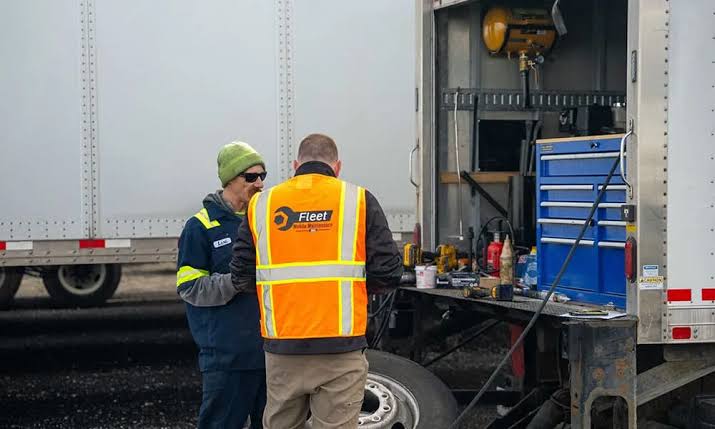
Most construction companies track their excavators and cranes like they’re gold. Trailers get parked in the yard and forgotten until one doesn’t show up on pour day. That’s backwards, since a trailer failure doesn’t just cost a repair bill. It stalls the crew, pushes every trade behind it, and turns a scheduled delivery into a liability conversation with the general contractor.
Trailers sit on the critical path whether anyone planned for it or not
Critical Path Method scheduling assumes materials arrive when they’re supposed to. Concrete pours, steel erection, and framing crews all get sequenced against delivery dates that someone entered into the schedule months earlier. Nobody builds a line item for “trailer breaks down on I-75 with the rebar shipment,” but that’s exactly what happens when preventive maintenance gets treated as optional.
A construction supply chain running on just-in-time delivery has almost no buffer built in. There’s no stockpile sitting on site waiting to be used. When a load doesn’t arrive, the crew waiting for it either stands idle or gets sent home, and the schedule shifts. On a project with dozens of interdependent trades, one missed delivery doesn’t cost a day, it costs a day multiplied by every downstream activity that depended on it. That’s the argument for treating trailer maintenance as schedule insurance rather than a maintenance department line item.
The financial case goes well beyond the tow bill
When a trailer goes down mid-haul, the invoice from the tow company is the smallest number on the page. Add up the repair at emergency rates instead of scheduled rates. Add the idle crew hours paid while everyone waits on material that isn’t coming. Add the cost of rescheduling a concrete pump or a crane rental that was booked around a delivery window. Add the possibility of liquidated damages if the delay pushes a contract milestone.
None of these costs show up on the maintenance budget. They show up scattered across project accounting, which is exactly why they get underestimated. A fleet manager looking only at repair invoices will conclude maintenance is expensive. A project manager looking at the full cost of a stalled pour day will likely conclude the opposite.
Brakes and tires deserve close attention
Commercial vehicle inspection data consistently makes brakes and tires important areas for fleet managers to monitor. Exact violation rankings and counts vary by year, inspection type, fleet, and equipment. Rather than relying on a headline statistic, construction fleets can use current inspection criteria, manufacturer guidance, and their own defect history to set priorities.
For a construction fleet, that means brake chambers, slack adjusters, and air lines deserve an early slot on any inspection checklist. Air leaks are common and easy to miss until a brake starts dragging or fails to release properly. Tire inflation and tread depth come right behind, especially in Florida where summer highway heat can accelerate tire aging and under-inflated tires tend to run hotter than they should. A blowout on a loaded lowboy isn’t just a maintenance event. It’s a load stuck on the shoulder and a crew waiting on material that was supposed to be on site an hour ago.
Wheel-ends, suspension, and coupling systems wear differently on construction loads
Construction trailers carry heavier, less consistent loads than long-haul freight, and that shows up in how the components fail. Wheel-end assemblies, bearings, hubs, and seals take a beating from repeated heavy-load cycles, and a bearing failure can lock a wheel or snap an axle outright. That’s not a roadside fix, it’s a recovery operation that can take a trailer out of rotation for days.
Suspension components tell a similar story. Leaf springs and U-bolts fatigue faster under repeated heavy loading, and Florida heat doesn’t help the metal. A broken spring mid-haul puts the trailer out of service immediately, no negotiation.
Coupling systems (kingpins, fifth wheels, pintle hooks) are a shared inspection point between tractor and trailer, and they’re often overlooked because neither side wants to own the checklist item. Worn pivots and dry connections create slack in the coupling, which is a control issue as much as a mechanical one. On a jobsite where a tractor is backing a loaded dump trailer into a tight grading area, that slack matters.
A daily inspection habit catches small problems before they become schedule problems
Driver Vehicle Inspection Reports exist for a legal reason, but they’re also one of the cheapest maintenance tools available. A driver who checks air lines, tire sidewalls, and lamps before and after every haul catches the small stuff, a hairline crack, a slow leak, a burned-out marker light. None of those things stop a truck on their own. Left ignored long enough, though, they can turn into out-of-service violations or roadside failures.
A digital DVIR with photo capture can make this easier to enforce and easier to audit later. It also builds a paper trail that may be useful in insurance reviews and DOT audits. A construction fleet that can produce a clean, dated inspection history isn’t just avoiding fines, it’s giving itself a better position if a dispute ever comes up about whether a defect was known before a failure occurred.
Different trailer types need different maintenance priorities
A generic “check tires, check brakes” checklist misses the equipment that’s actually specific to construction work. Dump trailers depend on hydraulic hoists, and seal and cylinder wear can show up long before a brake problem does. Lowboys have ramps and pivot pins that take repeated stress from loading and unloading heavy equipment, and those wear points don’t get much attention on a standard inspection form. Flatbeds live and die by their securement hardware, chains, binders, and tie-down points, which have specific working load limit requirements for loads like steel, lumber, and pipe.
Treating all three trailer types with the same checklist means something is probably getting under-inspected. A hydraulic seal failure on a dump trailer at the base of a grade doesn’t look like a brake failure, but it stops the job just as fast.
Florida’s climate can accelerate several common failure modes
Regional conditions matter more than most maintenance schedules account for. Salt air along the coast can corrode brake hardware and electrical connectors faster than inland fleets typically experience, which may mean lighting and ABS connector issues show up sooner and more often. Summer heat pushes tires toward earlier failure, both from thermal stress and from the extra load pressure that comes with hot pavement. Hurricane season brings debris on roadways that can damage undercarriage components, wiring harnesses, and suspension parts that a driver never sees hit.
A maintenance interval built for a temperate climate is likely to under-serve a Florida fleet. Adjusting service frequency for these seasonal factors isn’t an upsell, it’s matching the maintenance plan to the wear conditions the equipment is actually operating in.
Telematics data can help shift maintenance from reactive to scheduled
Fleet management software and telematics systems can log fault codes, brake application counts, and vibration alerts that used to require a mechanic physically inspecting the vehicle to catch. Used well, that data can let a maintenance team schedule service during a weather delay or a gap between project phases, rather than during the two weeks when every trailer in the fleet is booked for deliveries.
This is where the schedule-insurance framing pays off in practice. A trailer pulled for service during a rain delay costs little in lost productivity. The same repair done as an emergency during peak delivery weeks can cost a full day of idle crew time on top of the repair itself.
Locking in a maintenance partnership before build season starts
Waiting until a trailer fails to find a shop is generally the most expensive way to run a fleet. Construction fleets across the Southeast can discuss service needs and scheduling before build season with regional businesses such as Florida Truck and Trailer. Available inspection, repair, and priority-service arrangements should be confirmed directly. Planning ahead means a fleet is less likely to start searching for suitable shop time in the middle of a deadline crunch.
It can also change the fleet math. A contractor with a well-maintained, reliably available trailer pool may not need to carry as many spare units sitting idle as insurance against breakdowns. Fewer spare trailers can mean lower insurance premiums, less depreciation sitting in the yard, and less overhead tied up in equipment that mostly just sits there waiting for something to break, though the exact savings will vary by fleet size and insurer.
Maintenance planning belongs on the same calendar as the project schedule
Concrete pours get planned weeks in advance. Steel erection gets sequenced against crane availability. Trailer maintenance deserves similar treatment, not a reactive call to a shop after something has already failed on the highway. Once a construction operation starts scheduling brake service, tire rotation, and hydraulic inspections against project phases instead of an arbitrary calendar date, the trailers stop being the thing that quietly threatens the schedule and start being the thing that protects it.
