


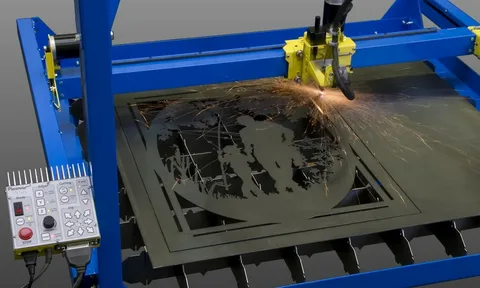
Shops that work with metal every day know that small mistakes can quickly grow into wasted material, rework hours, and inconsistent part quality. Automation has transformed plasma cutting by eliminating many of the manual errors that once slowed production. As CNC companies near me continue advancing technology, the difference between hand-guided cutting and automated control becomes even clearer.
Inconsistent Torch Height Leading to Uneven Cuts
Torch height plays a major role in cut quality. Too high, and the arc spreads out and loses intensity. Too low, and the arc gouges the surface or fails to cut cleanly. A CNC plasma cutter solves this by using height control systems that automatically adjust the torch to maintain optimal distance.
This consistency protects consumables and produces cleaner edges. Manual adjustments often vary from one operator to another, but automation applies the same height correction every time. With a CNC plasma cutting machine, the torch stays stable even on warped or irregular materials, ensuring predictable results across every sheet.
Manual Speed Changes That Distort Part Dimensions
Hand-guided cutting often leads to uneven speeds. Slowing down in corners or rushing through long lines causes heat fluctuation, leading to distortion, taper, or wider kerf lines. Automation prevents these inconsistencies by programming the exact travel speed needed for each contour.
Controlled speed produces parts that match the digital design more accurately. The CNC machine company supplying the system typically ensures the motion software handles acceleration and deceleration smoothly, reducing the risk of stretched or compressed cuts. This makes speed variation virtually nonexistent during automated operation.
Errors from Hand-guided Torch Movement on Complex Shapes
Complex shapes require steady hands and perfect timing, which is difficult to achieve manually. Human fatigue, angle changes, and slight hesitations can drastically affect the final part. A CNC plasma cutter instead follows programmed paths with flawless precision.
Automation allows intricate shapes, repeatable hole patterns, and tight internal curves without operator strain. For a CNC plasma cutting machine, the motion system replicates curves exactly as drawn in the CAD file. This makes complex cuts routine rather than time-consuming challenges.
Misalignment of Cut Paths Due to Poor Setup Control
Manual cutting depends heavily on marking accuracy and visual alignment. Slight shifts cause cut paths to drift, wasting material and producing unusable parts. CNC automation eliminates this issue by referencing fixed coordinates and zero points on the table.
Setup becomes a straightforward process. The machine aligns the torch with the programmed origin, and from there, all movement is controlled digitally.CNC companies near me often highlight this as one of the biggest advantages: predictable alignment reduces scrap and speeds up production runs.
Variations in Kerf Width from Fluctuating Travel Speed
Kerf width changes with heat input and cutting speed. Manual control makes these variables difficult to regulate, especially during long cuts. Automation standardizes kerf width by keeping travel speed, torch height, and arc intensity consistent.
This uniformity is essential for parts that must fit together or meet tight tolerances. ACNC plasma cutter ensures kerf variation is minimal, allowing fabricators to design more accurately. Automated systems provide the repeatability needed for high-volume or precision-focused shops.
Incorrect Lead-in/out Placements on Detailed Cuts
Lead-ins and lead-outs control how the torch enters and exits a cut. Incorrect placement can leave marks, distort edges, or cause blowout on delicate features. Manual cutting often misjudges these entry points.
With automated control, lead-ins and lead-outs are defined in the CAD/CAM program and executed without error. A CNC plasma cutting machine positions the torch according to programmed geometry, protecting the finished part from edge imperfections. Consistency in these transitions improves final appearance and reduces post-processing.
Misinterpreted CAD Designs from Manual Programming Slips
Manual programming invites mistakes—wrong numbers, incorrect offsets, and skipped dimensions all lead to flawed parts. Automation reduces these errors by allowing CAD files to flow directly into CAM software, which then generates the machine code.
This streamlined process improves accuracy from design to production. CNC companies near me often emphasize how digital integration prevents transcription errors that once plagued manual programming. Automated interpretation helps ensure the final cut mirrors the original engineering intent.
Uneven Pierce Points from Inconsistent Ignition Timing
Piercing determines how cleanly a cut starts. Hand-operated plasma cutters often struggle with consistent timing, leading to excessive slag, blowouts, or misaligned openings. A CNC plasma cutter performs pierces with precise timing for each location.
Automation regulates duration, height, and amperage for every pierce. This consistency creates clean entry points that improve the overall cut quality. With a CNC plasma cutting machine, uneven pierce marks become far less common, especially on thicker materials.
Material Placement Mistakes from Manual Fixturing Errors
Manual fixturing relies heavily on operator judgment. Misaligned sheets or incorrect starting positions cause parts to shift or cut off-center. Automation minimizes this issue by integrating stops, clamps, and reference points into the cutting workflow.
The machine verifies placement before the program begins. This reduces scrap and streamlines production, especially for repeated runs. A CNC machine company can outfit systems with sensors and automatic alignment tools to further reduce manual setup errors.
Automation removes many of the limitations of hand-guided plasma cutting by improving consistency, repeatability, and cut accuracy. Amtec Solutions Group helps manufacturers strengthen their operations with advanced CNC plasma systems and tailored automation solutions that cut down on errors, streamline production flow, and deliver dependable results across a wide range of project requirements.
